

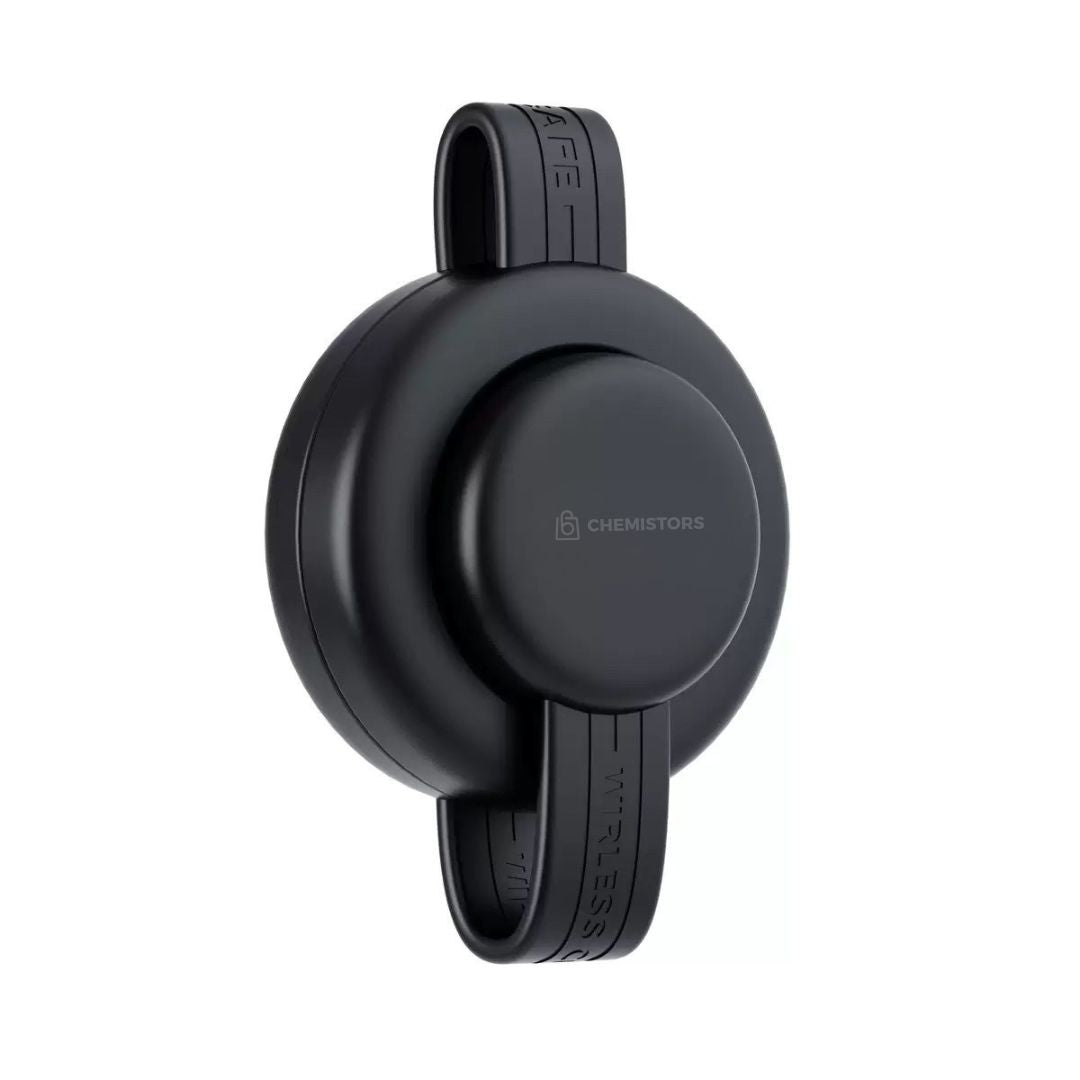
Wireless charging vs wired charging is a trade-off between speed and convenience, not a contest one side wins outright. Wired charging is faster and wastes less power. Wireless charging removes the cable from a desk you sit at for eight hours. Chemistors sells wireless charging hardware, so weigh our verdict with that in mind. Every number below is sourced.
How Each One Actually Moves Power
Wired charging sends DC power straight down a USB-C cable. The phone and charger first negotiate a voltage over USB Power Delivery, and many Samsung and Android phones then use PPS charging to fine-tune that voltage in small steps. The path is short and the losses are small. Wireless charging does more work for the same result. The pad converts power into an alternating magnetic field, a coil inside the phone picks that field up, and the phone converts it back to DC. Each conversion costs something, and the air gap between the two coils costs more.
That is why the efficiency numbers separate so clearly. Independent testing puts wired chargers in the region of 85 to 95 percent efficiency, while inductive wireless setups typically land between 60 and 80 percent. Alignment matters too: a phone sitting off-centre on a flat pad can lose up to half its charging efficiency compared with a properly aligned coil. This is the practical case for magnetic alignment, which is what MagSafe and Qi2 standardised, and our Qi2 vs MagSafe comparison covers where the two standards differ.
Speed: Where the Watts Actually Land
Peak wattage on a box is not what your phone sustains. MagSafe and Qi2 are rated at 15W, but real charging often settles at 10 to 12W once the phone starts managing heat. The newer Qi2 25W profile, paired with a 30W adapter, narrows the gap considerably on 2025 and 2026 phones. Wired USB-C Power Delivery still holds a clear lead. AppleInsider's charging tests (2021) found USB-C consistently ahead of MagSafe. Current iPhones reach roughly 50 percent in about 20 minutes on a 30W to 40W adapter.
| Method | Rated peak | Typical sustained | Best for |
|---|---|---|---|
| USB-C Power Delivery (wired) | 27W to 40W | 25W to 35W | Fast top-ups before leaving |
| Qi2 25W (newest phones) | 25W | 18W to 22W | Desk charging with some urgency |
| MagSafe / Qi2 15W | 15W | 10W to 12W | All-day desk charging |
| Basic Qi pad | 7.5W | 5W to 7W | Overnight only |
The practical read: if you need 40 percent of a battery in 20 minutes, plug in. If the phone will sit on your desk for the next four hours, the wattage difference never becomes visible to you.
The Efficiency Gap, and What It Costs in Rupees
The energy waste is real and it is smaller than it sounds. A 2020 OneZero analysis measured a full 0 to 100 percent phone charge at about 15 watt-hours over a cable. The same charge on a wireless pad drew about 21 watt-hours, roughly 40 percent more. iFixit's 2024 testing put Apple's MagSafe charger at about 36 percent more power draw than wired. Both findings point the same way.
Now convert that to a bill. The gap is 6 watt-hours per full charge. Charge once a day for a year and that is about 2.2 units of electricity. At a typical Indian domestic tariff of ₹8 per unit, the wireless penalty costs roughly ₹18 a year. That arithmetic is ours, derived from the OneZero figure, and you can check it in one line.
So the honest position is this: the efficiency argument against wireless charging is technically correct and financially irrelevant. What that wasted energy actually becomes is heat, and heat is the trade-off worth taking seriously. Our wireless charging desk mat vs Qi pad comparison covers how mat-integrated coils handle that differently from loose pucks.
Heat, Battery Health and Port Wear
Wasted energy in an inductive system leaves as heat between the coils, which is the layer sitting against your battery. Apple's own guidance is direct. Avoid ambient temperatures above 35C, "which can permanently damage battery capacity." Apple adds that charging inside certain styles of cases "may generate excess heat." That threshold matters more in India than in the markets these products are designed for. A desk in a non air-conditioned room in May sits close to 35C before a charger adds anything.
Context on how much headroom you have. Apple rates iPhone 14 and earlier batteries to keep 80 percent of original capacity at 500 complete charge cycles, and iPhone 15 and later at 1,000 cycles. Heat eats into that margin, and a thick case on a wireless pad is the most common way to lose it.
The counter-argument for wireless, port wear, is weaker than most listings suggest. The USB-IF specification rates USB-C connectors for a minimum of 10,000 insertion cycles, against 1,500 for the old USB-A. Plug in twice a day and that is over a decade of service. Port wear is a genuine issue for field technicians and almost nobody else.
Which One Should You Actually Use
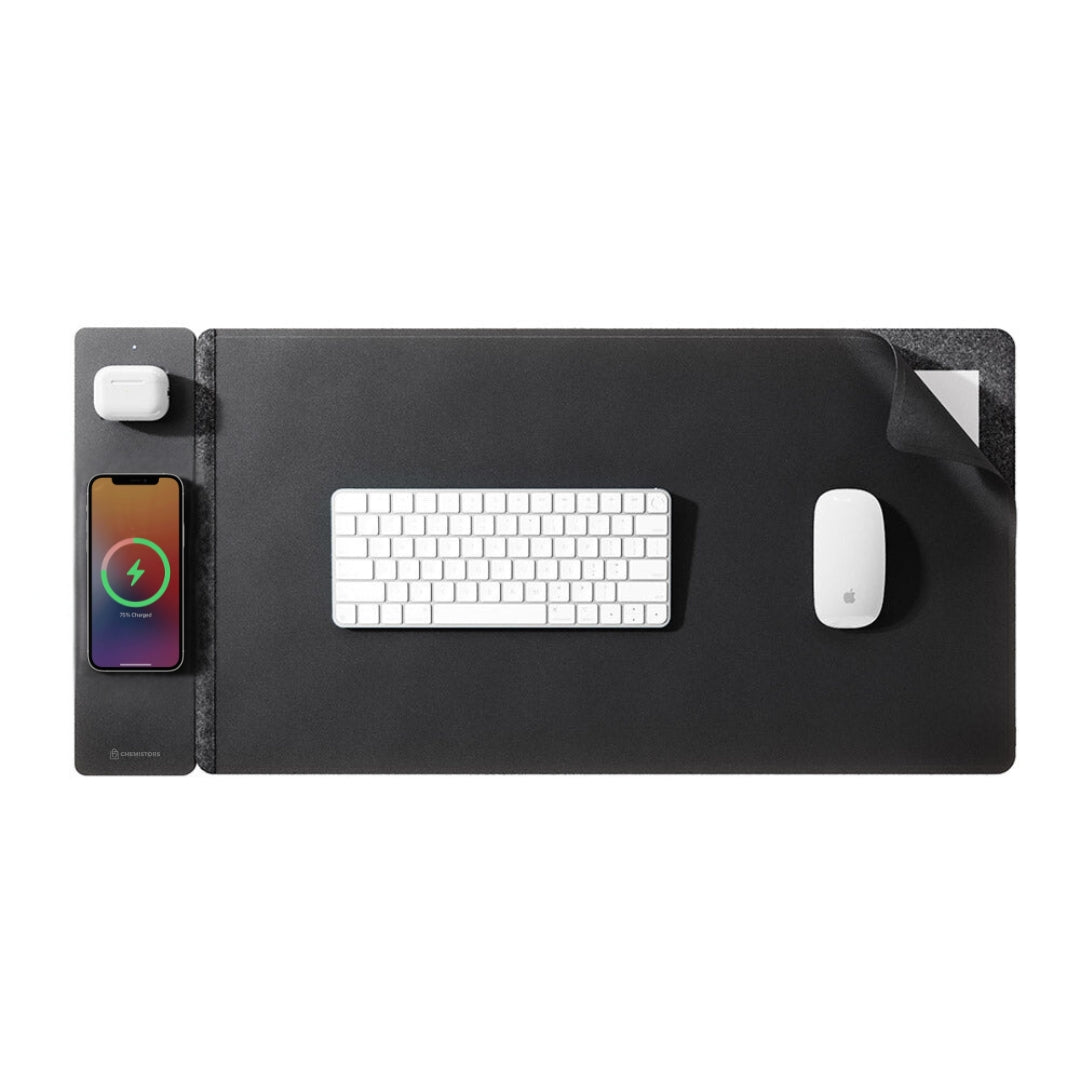
For most desk-based work in India, the answer is both, split by situation. Use wireless while you are sitting at the desk. Charging speed is irrelevant when the phone has six hours on the surface. The real gain is that you pick the phone up and put it down without a cable. A Chemistors wireless charging desk mat puts the coil under the work surface so the phone charges where it already lives.
Use wired when you are leaving in 20 minutes, when the room is genuinely hot, or when the phone is in a thick case you will not remove. Those three situations cover nearly every reason wireless disappoints people.
For travel, the calculus shifts again: a folding multi-device pad such as the Chemistors 3-in-1 foldable charger replaces three cables and adapters in a bag, which is worth more than the watts it gives up. Our complete MagSafe ecosystem guide covers how the desk and travel pieces fit together without duplicating hardware.
Frequently Asked Questions
Is wireless charging bad for my phone battery?
Not by itself, but the heat it produces can be. Apple states that ambient temperatures above 35C can permanently damage battery capacity, and inductive charging generates more heat than a cable does. The practical fix is not avoiding wireless charging, it is removing thick cases while charging and keeping the pad out of direct sunlight or off a hot windowsill.
Does wireless charging really waste 40 percent more electricity?
Roughly, yes. A 2020 OneZero analysis measured about 21 watt-hours wirelessly against 15 watt-hours wired for a full charge. In rupee terms that is about ₹18 a year at ₹8 per unit for one charge a day. The waste is real, but the heat it creates matters far more than the electricity bill does.
Is Qi2 as fast as plugging in a USB-C cable?
Not quite, though the gap has narrowed. Qi2's 25W profile on the newest phones sustains roughly 18W to 22W, while USB-C Power Delivery holds 25W to 35W on the same devices. For an overnight or workday charge the difference is invisible. For a 20-minute top-up before heading out, wired still finishes meaningfully further ahead.
Will I wear out my USB-C port by charging with a cable every day?
Almost certainly not. The USB-IF specification rates USB-C connectors for a minimum of 10,000 insertion cycles, compared with 1,500 for older USB-A ports. At twice a day, that is more than 13 years of use. Port wear is a real concern for people who plug and unplug dozens of times daily, not for typical desk or home use.
Should I use a wireless charger through a phone case?
Thin cases under about 3mm are usually fine, provided they contain no metal plates or embedded rings. Thicker cases increase the coil gap, which cuts efficiency and raises heat at the same time. Apple specifically warns that charging inside certain case styles can generate excess heat, so if charging feels slow and the phone feels warm, remove the case first.





Leave a comment
This site is protected by hCaptcha and the hCaptcha Privacy Policy and Terms of Service apply.